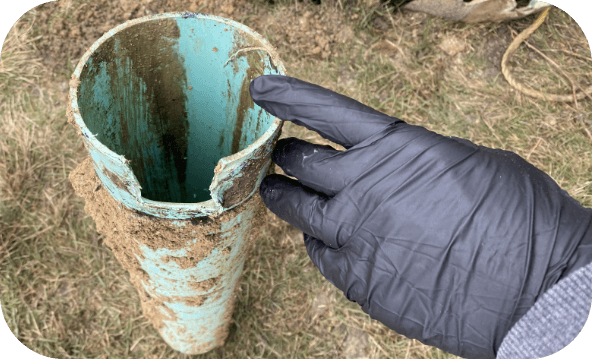
Water Line Replacement and Repairs
Even new homes can have a problem with their main water line due to improper installation, but most water line repairs involve older homes. Over time, pipes can fail due to aging, corrosion, and mineral deposits. Roots can invade pipes as trees and shrubs seek out water. The soil surrounding your home can shift slowly over time or suddenly. This may be due to earthquakes and other events that put excess pressure on your plumbing system. Eventually, clogs, leaks, or burst pipes can leave you with major problems in your main water line.
You may be able to see the signs of a problem well before you need a complete water line replacement. Sometimes, the symptoms are hard to miss. Other times, they’re more subtle. The most apparent change will be a drop in water pressure. This can be gradual or sudden, but it will usually be noticeable throughout your home.
If the problem involves a leak, your water bill will probably increase. The water in your home may smell funny or look cloudy if soil is entering your plumbing system. Leaks can also occur before the main water line reaches your home, resulting in suspicious wet or soggy spots in your yard.
Even if your water line appears to be working fine, you may still benefit from a full water line replacement.
You’ll eventually need to replace the lead and galvanized pipes, especially if you live in an older home. Over time, galvanized pipes corrode until they’re paper-thin. At that point, they can fail without warning.
Due to their longevity, most people used lead pipes. They were banned in 1986 under the Safe Drinking Water Act, however. Unfortunately, there was no law requiring that homeowners replace them, so many are still in use in older houses.
If your plumbing problem is small and you only need a minor water line repair, the process could be relatively simple. A complete water line replacement is more complex, though.
The steps we take for a water line replacement:
- Assess the problem and obtain any required permits
- Turn off the water supply to the home
- Excavate the existing pipe
- Replace the old pipe with new material, usually PEX or copper
- Pressure test the system
- Restore the surface to its original condition