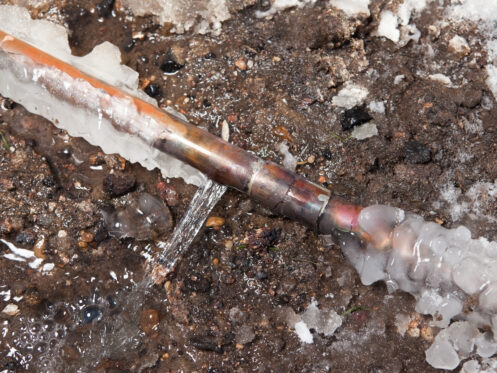
A frozen pipe can turn a normal winter day into a home emergency. One moment, you notice low water pressure, and the next, you hear dripping behind a wall. In some cases, the pipe thaws with no damage. In the worst-case scenario, the pipe splits and floods your home. After the initial panic subsides, you need to decide whether to fix the damaged section or completely repipe your home. Understanding the difference between frozen pipe repair and repiping helps you protect your home without overspending on the wrong solution.
Why Frozen Pipes Cause So Much Damage
Frozen pipes create problems because water expands as it freezes. That expansion increases pressure inside the pipe, which can cause cracking, splitting, or joint failure. Many homeowners assume the pipe bursts at the coldest moment, but pipe leaks often appear during thawing. Ice can temporarily block the break, and once water starts flowing again, the damaged area releases water quickly.
Pipes near exterior walls, unheated basements, crawl spaces, attics, and garage ceilings freeze more easily. Insulation gaps, air leaks, and inconsistent indoor temperatures increase the risk. Once one pipe freezes, it often signals that other sections sit just as vulnerable, especially in older homes with outdated plumbing layouts.
When Frozen Pipe Repair Makes Sense
Frozen pipe repair works best with isolated damage and when your plumbing system is otherwise in good condition. If a single section cracked due to a one-time temperature drop, repairing that portion can restore reliable service without major disruption.
A plumber may recommend a repair if your home has newer piping materials, such as PEX or modern copper, and the freeze occurred due to a specific cause you can correct. For example, a pipe may have frozen because insulation fell away, a crawl space vent stayed open, or a garage door remained cracked during a cold snap. If you fix the root cause, a repair can provide a durable solution.
Repairs also make sense when the leak is accessible. Exposed basement piping, utility room lines, and visible supply lines often allow for quick replacement of a damaged segment. In these situations, you can avoid opening walls and minimize restoration costs.
When You Should Consider a Repipe Instead
A repipe becomes the better choice when frozen pipes indicate a bigger pattern rather than a single bad moment. If your home experiences repeated freezes, multiple leaks, or constant repairs, you may spend more over time patching an aging system than replacing it.
Frequent problems often point to deteriorating pipe material. Galvanized steel corrodes internally, which restricts water flow and weakens the pipe. Older copper can develop pinhole leaks, especially in areas with aggressive water chemistry. Polybutylene and other outdated plastic piping materials can fail unpredictably, and freezing accelerates the damage.
What Your Pipe Material Says About Your Best Option
The type of pipe plays a major role in deciding between frozen pipe repair and repiping. PEX piping handles freezing better than rigid materials because it can expand slightly, although fittings can still fail under pressure. Copper pipes offer strong performance but can burst when frozen, especially if the water freezes in a long, rigid section with no expansion space. Galvanized steel becomes increasingly risky over time because corrosion creates weak spots and reduces flow.
Cost and Disruption: What Homeowners Should Expect
A frozen pipe repair usually costs less upfront because it addresses one area. You pay for labor, parts, and potential drywall or insulation repairs if the pipe sits behind a finished surface. If the leak is easy to access, repair costs stay relatively manageable.
Repiping costs more initially because it involves replacing large portions of your plumbing system. However, it can save money in the long term by eliminating the need for repeated leak repairs and reducing the risk of water damage. Repiping can also improve water pressure and flow, especially in older homes with corrosion-restricted pipes. Disruption varies depending on the home layout. Some repipes require opening walls or ceilings, while others allow for routing through basements, attics, or crawl spaces to minimize interior damage.
How to Know Which Option Protects Your Home Best
Base your decision on risk, not just cost. A single repair makes sense when you can confidently prevent future freezing and your plumbing system is modern and healthy. A repipe is the better choice when your home shows repeated failures, aging materials, or multiple vulnerable pipe runs. Repeated leaks raise the chance of mold growth and structural damage. Even if repairs seem affordable, the inconvenience and risk of another freeze-related burst may outweigh the savings.
The Smart Next Step After a Freeze
After a frozen pipe incident, avoid guessing. TYCO Plumbing can evaluate the damage and inspect the pipe condition to identify other vulnerable areas. Whether your home needs a targeted repair or a full repipe, the goal stays the same: restore reliability and prevent future emergencies. At TYCO Plumbing, we have been providing plumbing services to the Brighton area since 2016. If you think your plumbing system is at risk, contact us today.